 Solar & Battery
 Battery Only
Project Overview
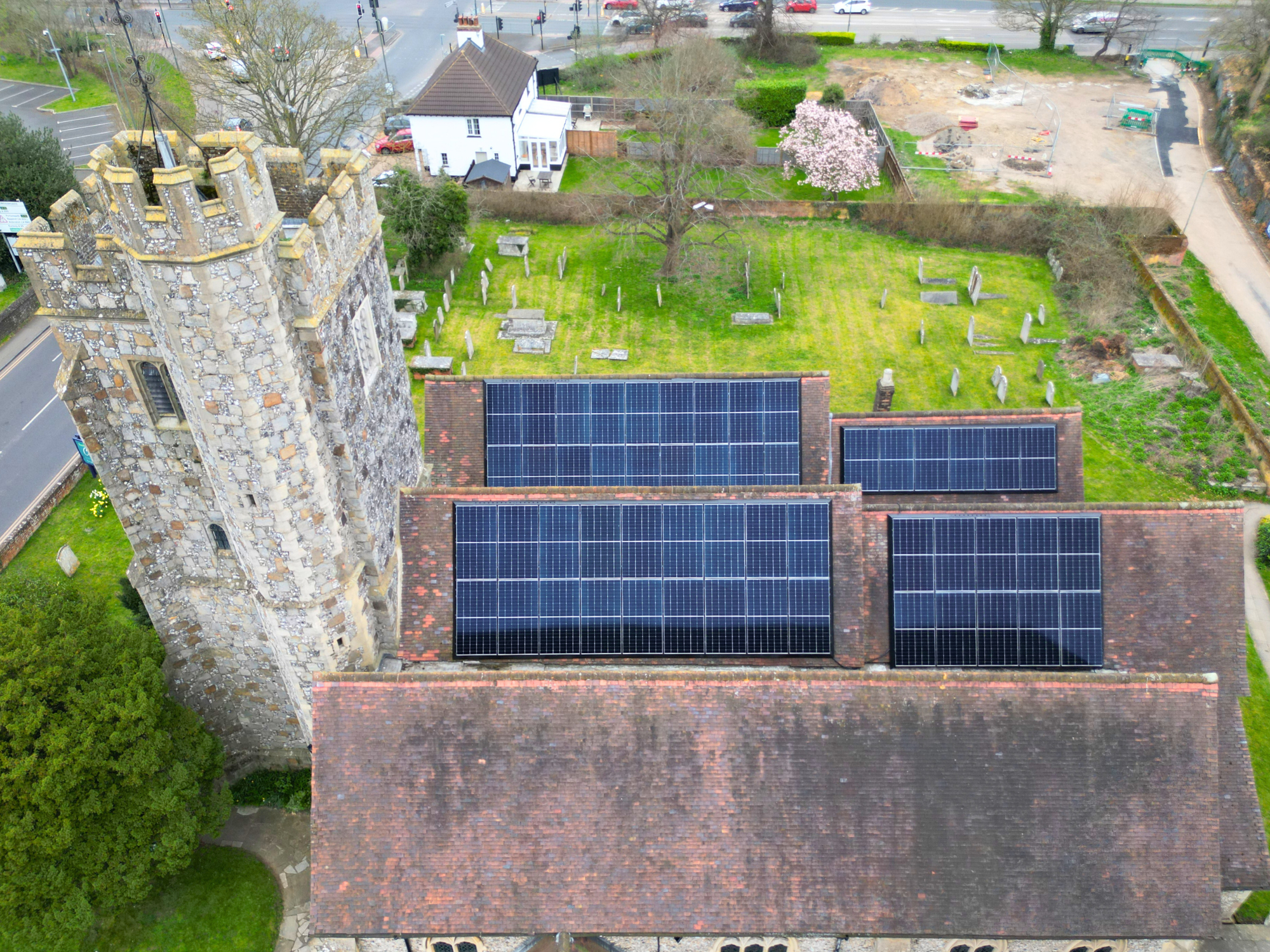
As part of a wider vision to make its buildings “fit for purpose for the next chapter”, St John’s Church installed solar to reduce its environmental impact and achieve long‑term energy savings.
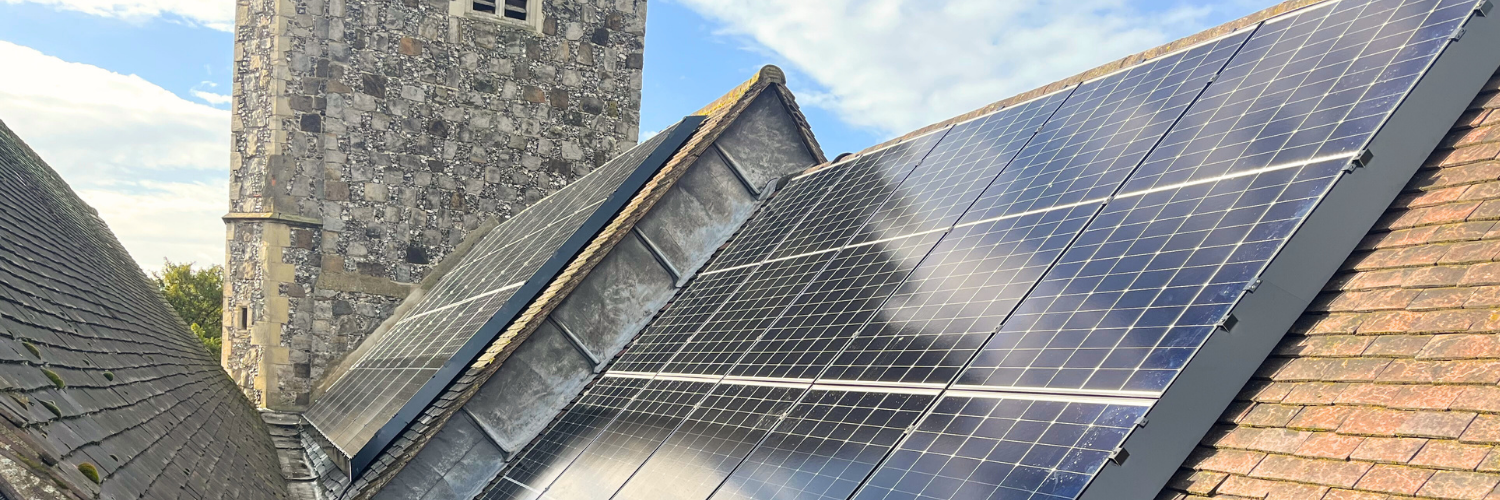
Given the heritage, character and Grade II* listed status of the building, the system needed to balance performance with visual sensitivity – and so was carefully designed to integrate with its surroundings.
This case study outlines the approach taken, the technology used, and the long-term benefits of the project.
SYSTEM COMPONENTS
- Solar panels: 52 x 530W LONGi Solar (27.56 kWp) – providing a strong power outage to size ratio.
- Inverters & optimisers: SolarEdge (25kWp) inverter and optimisers for efficient power conversion and panel level performance monitoring..
- Mounting system: Variosole mounting – providing a stable and reliable platform with strong load distribution.
- Battery storage: 2 x Tesla Powerwall 3 batteries (27kWh storage) – for backup power / to store excess energy for later use (or for export to the grid when not required).
- Pigeon-proofing: SolaSkirt® for discreet protection with a clean architectural finish.
IMPLEMENTATION
- Assessment: A detailed technical survey shaped the system design, with careful consideration given to the church’s Grade II* listed status.
- Mounting system: Variosole was fitted with plain roof hooks and Redtip hookstops, ensuring even weight distribution, reducing stress on the tiles.
- Installation: 52 panels were mounted on two south-facing pitched rooves, for a discreet finish in keeping with the church’s age and heritage.
- Integration: Cabling was routed externally to the inverter, which was connected to the church’s electrical system. The batteries were integrated to provide energy storage and backup power.
- Pigeon-proofing: SolaSkirt® supported heritage approval by providing a high-quality, discreet finish that met Diocesan and heritage advisor expectations.
RESULTS
This 27.56 kWp system is expected to deliver significant long-term savings while supporting the Church’s ambition to reduce its environmental impact. The addition of battery storage reduces reliance on the grid and maximises savings via the export of surplus energy.
Visually discreet and carefully integrated, the project balances performance, aesthetics, and sensitivity to the building’s heritage, proving that clean energy and self-sufficiency can go hand in hand.